
On this page
- A hinge taking orders from both ends
- Which knee problems respond, and which do not
- What the evidence actually supports
- Three self-checks that hint at an upstream cause
- What gets examined when the knee is the complaint
- See a physician first if
- Follow-up questions worth answering
- Ask a quick question
- Knee Pain Questions
Often yes, when the knee hurts because of how load is arriving at it — and no, when the joint itself is damaged. Anatomically the knee is a hinge, parked between the two joints that actually do the steering — the hip overhead and the ankle underneath. When either misdirects, the knee absorbs a share of force it was never designed to handle, and it complains. Chiropractic care addresses that upstream mechanics. It does nothing for a torn meniscus, a ruptured ligament, or an eroded joint surface.
The distinction matters more here than almost anywhere else in the body, because few complaints are treated so locally and examined so narrowly.
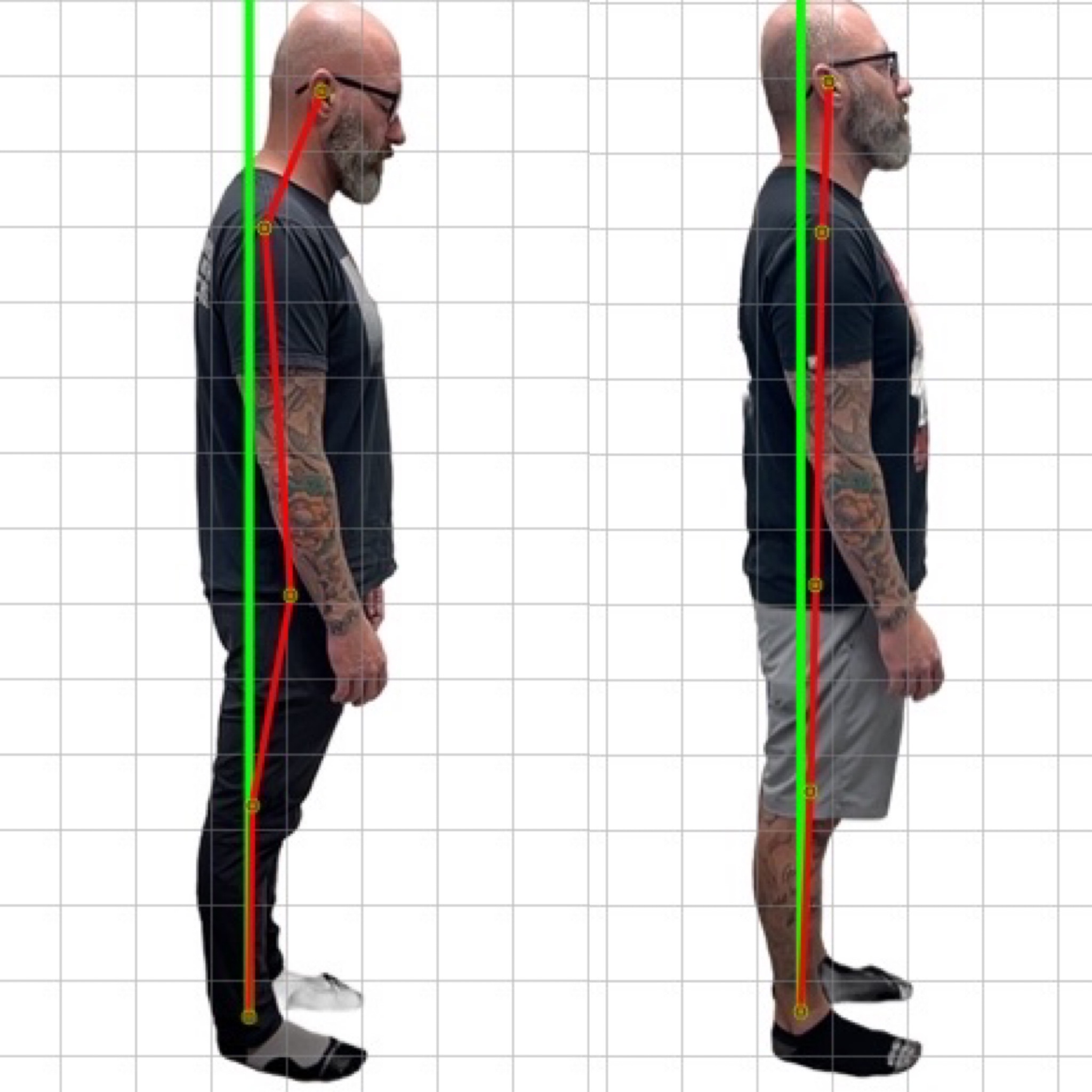
What a Visit Looks Like
An actual correction in the South Tampa room. No machines and no equipment queue — the hands-on portion of a visit really is this short. The full sequence is on our first visit page.
A hinge taking orders from both ends
Most joints in the leg can rotate. The knee, functionally, cannot do much of it — it bends and straightens, and that is close to the whole of its job. Rotation that has to happen somewhere gets handled by the hip above and the foot and ankle below.
Which means the knee spends its life obeying instructions from both ends. If the hip is not rotating the way it should, or the pelvis sits tilted so one leg is effectively loaded harder, the knee is the joint that takes up the difference. If an arch collapses inward, the shin rotates, and the kneecap stops tracking cleanly in its groove.
None of that damages the knee on any particular day. It loads it slightly wrong, thousands of times a day, for years. Then one run or one set of stairs becomes the moment it is blamed on.
Which knee problems respond, and which do not
Often responds
Kneecap tracking pain, ache on stair descent, pain that arrives after activity rather than during, one-sided patterns, and knees that hurt while imaging looks clean.
These are load-distribution problems.
Sometimes responds
Iliotibial band irritation and persistent tendon complaints, where mechanics contribute but tissue healing has its own timeline that nothing shortcuts.
Expect gradual, partial change.
Does not respond
Meniscal tears, ligament ruptures, locking or catching that blocks movement, and advanced joint-surface loss.
These need orthopedic assessment.
Needs urgent care
Hot, swollen, red knees; fever with joint pain; a knee that gives way completely; sudden swelling after a twist.
Infection and acute injury are medical, immediately.
What the evidence actually supports
Being straightforward about this: the research base for manual therapy aimed directly at the knee is modest, and anyone presenting it as settled is overselling. What has better support is the broader principle that knee loading is influenced by hip strength and mechanics, and that addressing the hip changes knee symptoms for a meaningful share of people with kneecap-related pain.
That is the mechanism worth relying on. It also sets a fair expectation: this approach helps when the mechanics were the problem, and demonstrates within weeks whether that was the case for you. If nothing changes, the answer is to look elsewhere rather than to keep going.
Three self-checks that hint at an upstream cause
Compare stairs in both directions
If going down is distinctly worse than going up, the hip is likely failing to take its share while you lower yourself under control.
Stand on one leg and watch the knee
If it drifts inward toward the midline while the pelvis drops on the opposite side, hip control is a strong candidate.
Look at the soles of your shoes
Wear patterns that differ noticeably between the pair are direct evidence that you load each leg differently — worth showing whoever examines you.
None of these diagnoses anything on its own. They are useful for deciding whether an examination that includes the hip, pelvis, and spine is more likely to help than another course of treatment aimed at the knee.
What gets examined when the knee is the complaint
A structural assessment for knee pain spends most of its time above and below the knee. How the pelvis sits and whether it is level under load. Hip rotation available on each side. How the foot strikes and whether the arch holds. What the knee does through a squat and a single-leg stance rather than what it does lying still on a table.
The knee itself is examined too, primarily to rule things out — ligament stability, joint line tenderness, whether anything catches. If those tests raise concern, that is an orthopedic referral rather than a treatment plan. There is no value in delivering weeks of mechanical care to a knee with a structural tear in it.
Where the picture is mechanical, care goes where the fault is. Our knee pain relief in Tampa sets out how that plays out in a course of treatment, and the reasoning behind working upstream is covered in what Advanced BioStructural Correction is.
See a physician first if
- The knee is hot, red, or swollen and you have a fever
- It locks, catches, or blocks partway through a movement
- It gave way suddenly, or swelled up within a few hours of a twist
- You cannot bear weight on it
- The pain followed significant trauma and has not eased
Follow-up questions worth answering
How quickly would I know whether this is working? Mechanical causes tend to reveal themselves fast — within a few weeks there should be measurable change in how you load the leg, even if the pain has not fully gone. Absence of change that early is a signal to reconsider rather than to continue.
Should I stop running or training? Rarely all of it. What usually changes is volume, surface, or a specific movement, and which one depends on the findings. Blanket rest tends to postpone the problem rather than solve it.
Do I need a knee brace? A brace can reduce symptoms while worn, which is useful during a flare. It does not alter what is sending the load there, so it works better as a temporary aid than as a plan.
Ask a Quick Question
Send the short version and Dr. Andy Xue’s team replies directly — usually the same day. Prefer to talk it through? Call 813-340-5708.